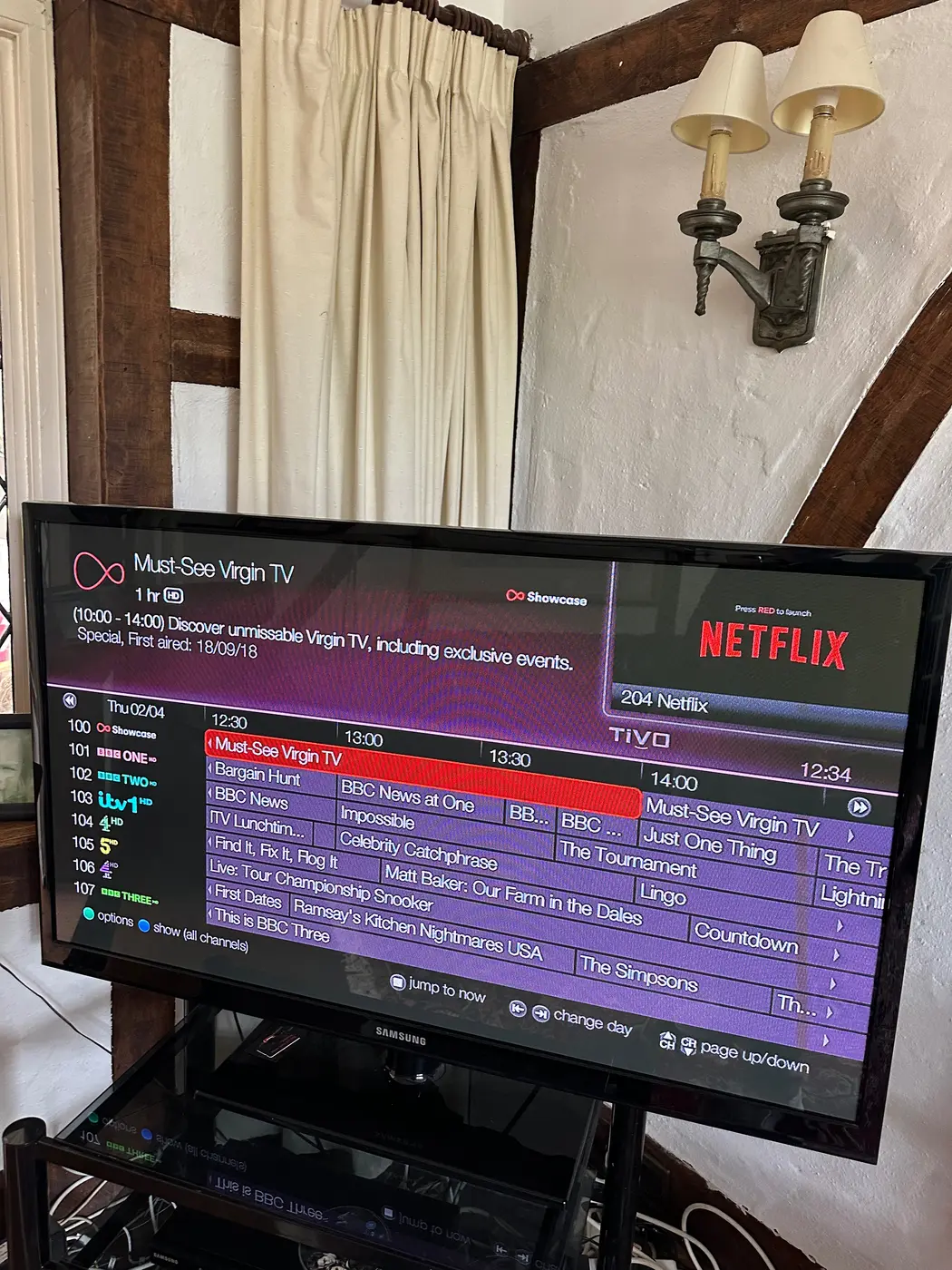
BBC- The go to channel
When I was growing up in the 60s the BBC was easily the most watched channel. ITV, the channel with the adverts had come to air in 1955 but in its early days found it difficult to compete with the high quality of BBC programming. The licence fee was introduced for radio in 1923 and for TV in the 1940s. The model and funding arrangement worked as TV ownership was embryonic post World War 2.
I remember BBC 2 hitting the airwaves in 1964 as I, as a 7 year old TV junkie, tuned it in for my bemused father. In those days I knew the back of our black and white TV as much as I knew the front. We had an old TV in an other room and I would try and get South country 's Westward TV instead of TWW which served Wales before it was replaced by Harlech TV. I was a TV anorak and I fairly well knew even as a youngster that the domination of TV by 2 operators could not last for ever and that UK viewers would soon get a choice similar to the USA.
Is that the bookie's satellite dish?
The broadcasting revolution was soon to hit the UK in the late 1980s. I bought a 1.8 metre satellite dish which dominated the flat roof over my newsagents shop in Swansea. It was so large that customers thought it belonged to the neighbouring bookie. I famously fought the Pontypridd by election in 1989 and I proudly told the Sky news journalist, Richard Bestic, that my mother would be watching the interview on sky which had only launched 9 days earlier.
Channel 4 had launched in 1982, but it was the launch of Sky in '89 which heralded the explosion in viewing choice. Since that date the huge difference has been in the variety of ways that viewers are able to get their viewing. Satellite dishes and cable vied with each other but the huge game changer has been smart tvs, smart phones and 4/5 g and super fast broadband.
I remember once being on a standing committee in the House of Commons relating to broadcasting legislation when I was cut off in my prime by the Labour Chair of the committee Gwynedd Dunwoody. I was talking about the internet and the way in which people would soon be accessing their TV programmes when Gwynedd told me that this legislation was about broadcasting and not the internet. I internally laughed but finished my remarks. Gwynedd could not conceive in the early 1990s that programming could be delivered in such a revolutionary and unusual manner. Fast forward to now and I own 4 TVs which access all their programming via WiFi. Last month I was watching GB News live on my phone 35,000 feet up on an Air France flight thanks to Elon Musk's starlink. It was faultless, perfect high definition and no buffering. Starlink is being installed on all BA flights- and it is FREE to use with other airlines following suit.
Umbilical Cord needs cutting and quick
The bleeding reality is that the days of "watch with mother" and TV scheduling is gone. The viewer is in command and on demand is the mantra.
The BBC has been a product of its funding and it has enviously guarded its licence fee model with a religious style zealotry. Who can blame them when the money tree has been bearing fruit for decades with guaranteed billions every year. The commercial channels have had to get their hands dirty in the competitive world of commercials whilst seeing the BBC happily having the cap in their hand filled, by law, by those with TVs capable of receiving the BBC.
This funding position was once the envy of every broadcaster, but this is no longer the case. Whilst the BBC chiefs have demanded higher licence fees from the viewers the hand that has fed it has decided enough is enough.
Over the past few years the numbers of people paying the licence fee has dropped dramatically. Last year 300,000 fewer people paid the licence fee compared to the year previously. In total the BBC is now losing £1billion annually compared to just a few years ago. The refuseniks are a combination of those evading the fee, but the increasing number are people who can justly argue that they no longer watch the BBC in any way shape or form.
The figures could not be better illustrated by the viewing for the BBC over the Christmas in the 1970s. My family would be glued to the "box" and the BBC for the entirety of Christmas Day. TV programmes like Morecambe and Wise used to get 20+ million viewers for the specials, whilst even Eastenders would be well over 23 million viewers in 1985. Last Christmas Eastenders got 2.8 million viewers and the most watched BBC Christmas programme outside of the King's speech got 4.3 million viewers.
Netflix now boast 17+ million subscribers whilst Amazon Prime has well over 13 million. In addition to these new streaming and content producing giants you also have Apple and Disney who also provide content and production. The quality of the programming can be excellent.Individuals and families are choosing to voluntarily subscribe to these providers.
On the news delivery front GB news now boasts more viewers than the BBC News whilst Sky is noticeably up against it. I subscribe to Skynews Australia which I find hugely entertaining. Even broadcasters like Talk TV (free) are attracting up to 100,000+ a day. Even Mike Graham, Ex Talk TV, has started his own subscription channel and within weeks of broadcasting boasts over 140,000 subscribers. My friend Mayhar Tousi has his own subscription channel and it is going from strength to strength. All of this does not bode well for maintaining the existing funding model for the BBC.
The licence fee went up to £180 on April Fool's day, but the real question is who is fooling who? In desperation the BBC has sent out 46 million letters reminding people about the obligation to pay the fee. This smacks of desperation by the BBC as their once loyal viewers now flee to pastures new. Meanwhile Secretaries of State of all political persuasions bleat about reviewing the arrangement only to shy away from making a move. Not making a move is a decision of sorts though but the consequences will end up badly for the BBC.
My contention is that ignoring the icebergs of changing methods of receiving entertainment, along with mushrooming competition on all fronts can only end in one way. If we really do treasure "Auntie" and we want to prevent her from ending up in a broadcasting care home with very few visitors then action is a necessity, and it should be grasped with enthusiasm and not fear. Maybe the new DG at the top, Matt Brittan, can bring some of his Google insight and commercial and business expertise into play. Otherwise I fear at some stage in the not too distant future I will switch on the history channel to watch a replay featuring this somewhat sad sentence....
It's 9 o clock, and this was the BBC. Goodnight.
Nigel Evans
5th April 2026